
|
News Detail
How to Get Rid of Fruit fliesIssuing time:2024-06-01 10:23Author:Jack Hui More than just a nuisance, a single fruit fly can lay up to 50 eggs per day. Here’s what to do if they take up residence in your house. What are fruit flies?
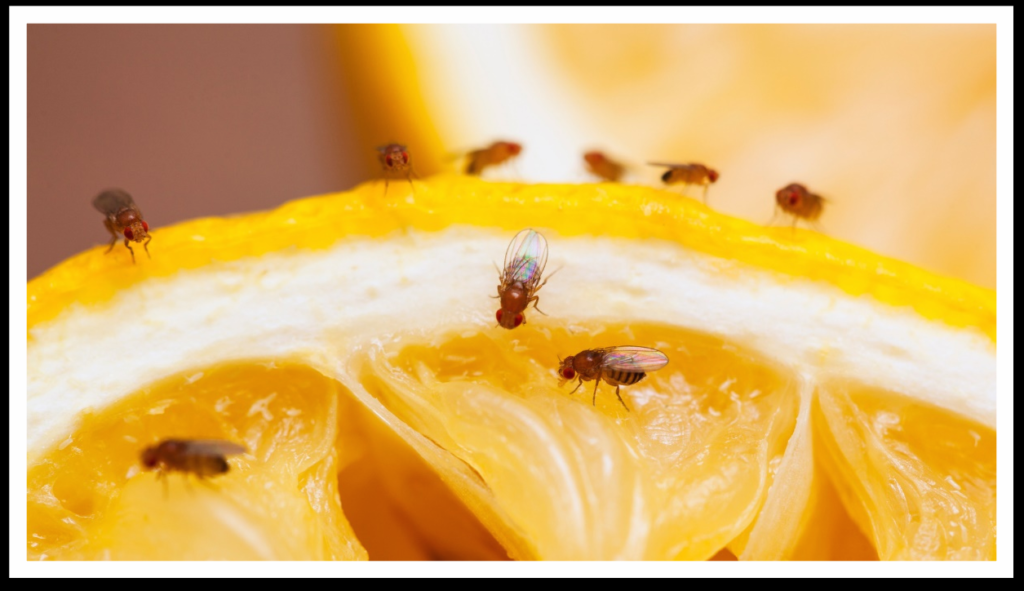
Fruit flies are any two- winged insect of either the familyTripeptideor the familyDrosophilidae(orderDiptera) whose larvae feed on fruit or other vegetative matter. Insects of the familyTrypetidaeare often referred to as large fruit flies, and those of the Drosophilidae as small fruit flies or vinegar flies. Fruit flies are common in homes, restaurants, supermarkets and wherever else food is allowed to rot and ferment. Adults are about 1/8 inch long and usually have red eyes. The front portion of the body is tan and the rear portion is black. Fruit flies lay their eggs near the surface of fermenting foods or other moist, organic materials. Upon emerging, the tiny larvae continue to feed near the surface of the fermenting mass. This surface-feeding characteristic of the larvae is significant in that damaged or over-ripened portions of fruits and vegetables can be cut away without having to discard the remainder for fear of retaining any developing larvae. The reproductive potential of fruit flies is enormous; given the opportunity, they will lay about 500 eggs. The entire lifecycle from egg to adult can be completed in about a week. Fruit flies are especially attracted to ripened fruits and vegetables in the kitchen. But they also will breed in drains, garbage disposals, empty bottles and cans, trash containers, mops and cleaning rags. All that is needed for development is a moist film of fermenting material. Infestations can originate from over-ripened fruits or vegetables that were previously infested and brought into the home. The adults can also fly in from outside through inadequately screened windows and doors. Fruit flies are primarily nuisance pests. However, they also have the potential to contaminate food with bacteria and other disease-producing organisms. What’s the difference between fruit flies and Gnat?
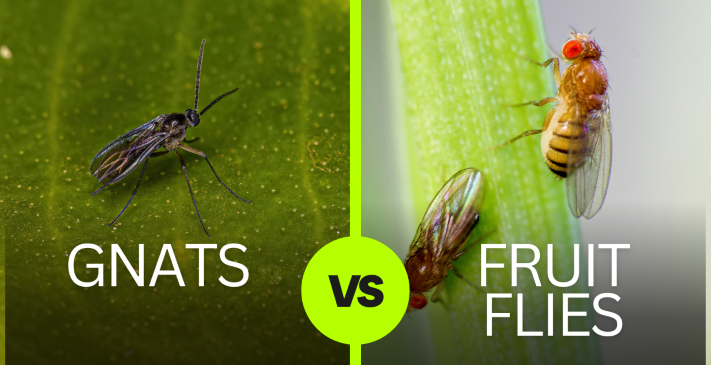
Both fruit flies and fungus gnats are common nuisance insects. In fact, they cause so many of the same issues that homeowners easily misidentify them. Although the flying pests have similar habits and look somewhat similar, fruit flies and gnats are quite different: Color Fruit flies range from tan to black. Fungus gnats are dark gray or black. Shape Thinking about fruit flies or gnats in comparison to other pests can help identify them. Fruit flies have a rounded silhouette like a smaller version of the common house fly. On the other hand, fungus gnats feature dangling legs and long bodies that make them appear similar to a small mosquito. Eyes Fruit flies are easy to recognize by their big, red eyes, but fungus gnat eyes are so small they are hard to see. Habitat Another difference between fruit fly and gnat infestations is where the pests gather. Fungus gnats’ nest in the soil of gardens or indoor potted plants to feed on organic matter. Fruit fly adults eat overripe fruits or rotting food in trashcans and fruit fly larvae feed on the slime found in dirty drains. What attracts fruit flies to your house?
Let’s take a look at the 5 most common signs that indicate you have a fly infestation brewing. Flies If you see flies buzzing around the refuse area, the base of wheelie bins or other waste containers, it may indicate a problem. Check anywhere that water pools or may be standing, such as guttering, rainwater tanks, buckets, plant pots etc. Also check areas that are difficult to clean thoroughly, such as drainage channels, drains and sub-floor cavities where the contents of broken drains may be accumulating. Gully traps, fat traps and areas around sinks and below damaged floor tiling should also be monitored. Spot clusters Secondly, if you see small dark spots on your light fittings or the upper sections of your walls it’s a good indication of a problem. These spots or specks are fly droppings. Maggots Maggots are a sure sign of a fly problem because maggots are flies in their larval stage. Seeing maggots indicates a fly breeding site. You could discover maggots in rubbish bins, deteriorating food, garden refuse, pet waste or dead pests (such as rats). A terrible smell If you’ve noticed a foul smell in the air, it could mean that you have dead rodents in the roof space, the vents or any other concealed space. If you can smell a dead rat, the chances are high that a fly has already found its way to it and started laying eggs. Wait a little bit longer and you’ll see maggots, too! Heat waves This final sign often is a precursor to a small problem rapidly becoming a big problem. Whilst different species of fly have different lifecycles, their lifecycles all speed up as temperatures rise, enabling them to reach adulthood quicker, and thus to breed faster. How to get rid of fruit flies?
If you’re sure you’ve identified the critters correctly, then try one of these effective remedies to get rid of fruit flies in your kitchen. Apple Cider Vinegar and Plastic Wrap For this DIY fruit fly trap, pour a little apple cider vinegar into a glass, or just remove the cap from a bottle. (It doesn’t have to be full — nearly empty will also work.) Cover the opening with plastic wrap and secure with a rubber band. Then, poke a few small holes for the fruit flies to enter. They can’t resist the scent of vinegar, and they won’t be able to exit once they’re inside. For an even better chance at success, make several of these traps and place them around your kitchen. A Paper Cone, Vinegar, and Old Fruit Place a little vinegar and a chunk of very ripe fruit in a jar. Then, roll some paper into a cone and stick it into the jar, placing the narrow opening down. (You can recycle or compost the homemade funnel afterwards.) The smell of rotting produce will help entice the fruit flies into the mixture, but the cone part of this fruit fly trap makes it difficult for them to get out. Vinegar and Dish Soap If you find your fruit flies impervious your plastic wrap or paper cone traps, try adding three drops of dish soap to a bowl of vinegar, and leave it uncovered. The soap cuts the surface tension of the vinegar so the flies will sink and drown. Old Wine or Bee Like vinegar, fruit flies love the smell of wine. Try leaving out an open bottle with a little leftover liquid — the skinny neck will keep the flies trapped. We also recommends using stale beer to attract fruit flies to a DIY trap. Add a couple of drops of dish soap to either for surer success. Our Solution  Insect TrapIf your company is in the food and beverage industry, it’s crucial to maintain health and safety standards – and safeguard your reputation. That means keeping kitchens and restaurants free of flies and insects. The most effective and hygienic way to do this is with a purpose-built fly killer. Philips Actinic BL lamps have been specifically designed for the food and beverage industry. They emit the precise wavelengths of UV light that insects are attracted to, drawing them into the fly killer where they get eliminated. These lamps, which are considered best-in-class in reliability, also provide high & stable UV-A output compared to other lamps offered in the industry, thus ensuring the effectiveness of electronic fly killers. We DENGX has been an experienced manufacturer and supplier of fruit fly control products for many years. We have developed various of traps, electronic killer and other accessories to help you expel and eliminate your flies and mosquito problem. Related DENGX*top selling online brand In China *Asian Games Supplier *We design and produce all items * All comply with IEC 60335-1 Ed. 4.1 b:2004 *Served 34,439 consumer, 4,132,680㎡ ?Contact us and get more info now! ?? jack@dengxiakeji.com WhatsApp/Wechat: +86 15815703419 Massive stock | Patented designs | Fast delivery References Wikipedia contributors. (2022, January 18). Drosophila melanogaster. Wikipedia. Retrieved January 19, 2022, fromhttps://en.wikipedia.org/wiki/Drosophila_melanogaster The Editors of Encyclopedia Britannica. (2020, May 19). fruit fly | Infestation & Spray. Encyclopedia Britannica. Retrieved January 19, 2022, fromhttps://www.britannica.com/animal/fruit-fly Potter, M. (n.d.). Fruit Flies | Entomology. The University of Kentucky. Retrieved January 19, 2022, fromhttps://entomology.ca.uky.edu/ef621 Manning, G. (2008, July 12). Introduction to Drosophila. The WWW Virtual Library: Drosophila. Retrieved January 19, 2022, fromhttp://ceolas.org/VL/fly/intro.html Philips introduction - Insect trap lamps |



Product Series
Smart Mosquito Control
Solar Mosquito Lamp
Glue Board Insect Light Trap
Commercial Bug Zapper

Solution
Garden, Hotel, Resorts
Restaurant, Bakery, Bar
Supermarket, Hospital
Food & Drug FactorySupport
Cooperation
About Us